The Art of Saying No: How Minimalism Can Improve Your Decisions
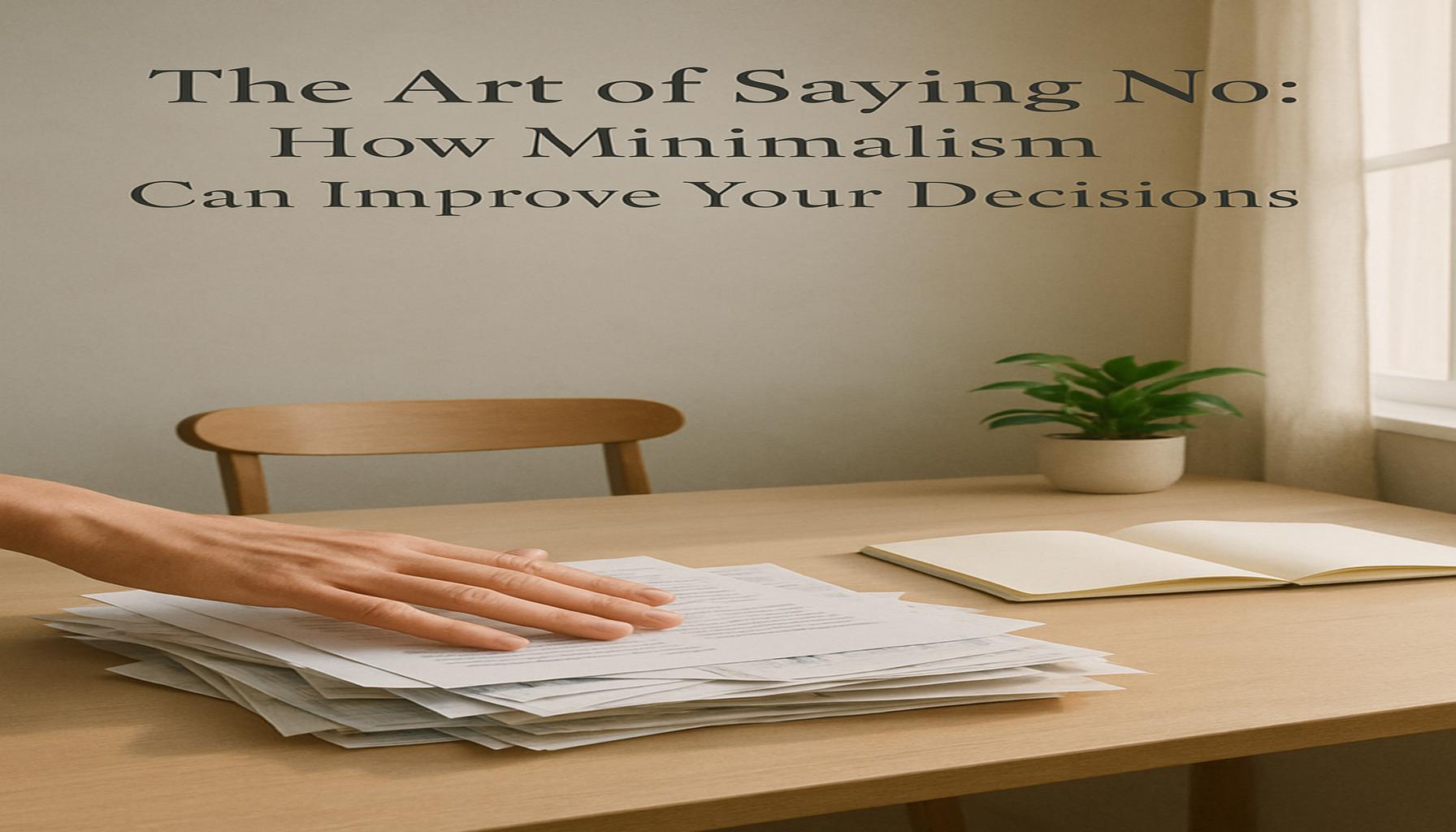
The Importance of Setting Boundaries
In a world overflowing with choices, the ability to say no is more crucial than ever. This skill impacts not only our interactions with others but also our cognitive load and emotional well-being. The nuances involved in saying no can often be overlooked, but mastering this ability can significantly improve the quality of our lives.
Minimalism is not just an aesthetic choice; it’s a lifestyle approach that encourages us to filter out excess. By adopting a minimalist mindset, we can elevate our decision-making process in profound ways:
- Clarity: Removing clutter from your environment helps clear your mind. For example, creating a serene workspace can enhance focus and productivity. When distractions are minimized, you can direct your mental energy towards tasks that truly matter.
- Prioritization: Understanding what is important allows you to make informed choices. This might involve assessing your commitments and recognizing obligations that do not align with your goals. For instance, if you value health and well-being, prioritizing a workout over an unimportant social event becomes easy with a clear set of priorities.
- Empowerment: Saying no can liberate you from commitments and obligations that drain your energy. It allows you to reclaim your time for pursuits that foster personal and professional growth. Whether turning down last-minute dinner invitations or opting not to volunteer for every project at work, each ‘no’ you utter can reinforce your boundaries.
The minimalist mindset serves as a rewarding framework whenever you face overwhelming requests. By evaluating your options through the lens of what genuinely aligns with your personal and professional core values, you may find yourself more inclined to reject distractions and harmful engagements.
Delving into the art of saying no can uncover deeper patterns of your decision-making process. From personal relationships that require boundaries to professional commitments that test your limits, embracing minimalism can revolutionize how you navigate life’s complexities. By learning to prioritize, you will discover that each decision becomes not only clearer but also carries greater significance, allowing for a more meaningful life experience.
In an age where obligations can pile up quickly, mastering the power of no is essential. It’s not merely about saying no to external demands; it’s about saying yes to your own values and aspirations. Developing this skill can ultimately lead to a more fulfilled and intentional life, free from the chaos of unnecessary commitments.
Recognizing the Triggers for Excess
Understanding when to say no begins with recognizing the triggers that lead to overcommitment. Modern life often encourages us to stretch ourselves thin; from friends and family requesting our time, to work expectations, and social obligations, saying yes can seem like the easier route. However, it is essential to periodically reflect on the motivations behind your commitments. Are you acting from guilt, fear of missing out, or a desire to please others? Identifying these triggers can clarify when it is appropriate to embrace the power of no.
The minimalist philosophy advocates for the intentional consumption of time, energy, and commitments. When you adopt this mindset, you begin to see your obligations as a limited resource. Here are three crucial factors to consider when determining your boundaries:
- Personal Values: Every decision should align with your core beliefs. When faced with a request, ask yourself if it resonates with your values or detracts from them. For instance, if you prioritize spending quality time with family, accepting additional work projects may create conflict. By assessing decisions against your values, saying no becomes a protective measure rather than a rejection.
- Quality Over Quantity: Minimalism promotes the idea of quality experiences over a multitude of mediocre ones. This can apply to social events, work duties, or even leisure activities. Instead of overwhelming your calendar with various commitments, choose engagements that enhance your life. This approach not only reduces stress but promotes deeper connections and richer experiences.
- Long-term Goals: Evaluate how each commitment aligns with your long-term aspirations. A request to attend an event might pull you away from goals, such as career advancement or personal development. If it doesn’t serve your future, the answer should be no. This foresight fosters a sense of ownership over your choices and reinforces your ability to prioritize effectively.
By implementing this framework, you can shift your perspective and cultivate a newfound confidence in your ability to say no. For many, this may initially feel uncomfortable; after all, society often views the act of declining as rude or overly assertive. However, embracing minimalism encourages a cultural shift towards valuing authenticity over obligation. Recognizing that it is acceptable to prioritize your well-being might just open doors to a more fulfilling lifestyle.
Ultimately, saying no is about respecting your time and energy. It’s a skill that cultivates a sense of agency and freedom. Each time you assertively decline an unwanted request, you reinforce the boundaries that keep your life aligned with your values and goals. Thus, the art of saying no is not a sign of weakness; it is a demonstration of strength in a world that often pressures us to conform.
| Advantages of Minimalism | Impact on Decision-Making |
|---|---|
| Simplified Choices | Reduces overwhelm and enhances clarity, allowing quicker and more informed decisions. |
| Increased Autonomy | Empowers individuals to confidently say no to distractions, focusing on what truly matters. |
Understanding the benefits of minimalism is essential for transforming your decision-making process into a more efficient and rewarding experience. Embracing a minimalist lifestyle leads to simplified choices that limit distractions and promote mental clarity. When faced with fewer options, your ability to make decisions becomes more direct, fostering a proactive approach to everyday situations.Moreover, minimalism cultivates increased autonomy. By prioritizing essential needs over transient wants, individuals reclaim control over their lives. This newfound autonomy has significant ramifications, as it empowers individuals to say no to societal pressures and unnecessary commitments, allowing a deeper focus on personal goals and values. Discovering how to employ these principles can redefine your relationship with decision-making and enhance your overall quality of life.
The Psychological Benefits of Embracing No
While the decision to say no often feels burdensome or even counterintuitive in a society that glorifies busyness, the psychological benefits of embracing minimalism and practicing the art of no can be transformative. Research indicates that individuals who set clear boundaries regarding their commitments experience enhanced mental well-being, reduced stress levels, and increased overall satisfaction with life. Here’s how adopting a minimalist approach to decisions can contribute to these benefits:
- Reduction of Overwhelm: In an age of constant connectivity and information overload, our brains can become easily cluttered. Studies have shown that decisional fatigue is a real phenomenon; making too many choices can drain cognitive resources. By saying no, you limit the number of decisions you need to make, thereby preserving mental energy for what truly matters. This focus allows for clearer thinking and better decision-making skills in the long run.
- Improved Self-Esteem: When individuals feel empowered to assert their boundaries, they often experience a boost in self-esteem. A study published in the journal Personality and Social Psychology Bulletin revealed that asserting one’s needs promotes feelings of self-worth. Each time you say no, you reinforce the idea that your values and time are not only recognized but respected. This, in turn, enhances a sense of autonomy and personal power, cultivating a more positive self-image.
- Enhanced Emotional Clarity: Engaging in a minimalist lifestyle helps to clarify emotional responses. By fully engaging in fewer obligations, you can attain a deeper understanding of your feelings regarding activities, relationships, and responsibilities. This emotional clarity enables you to make decisions based on genuine interests and passions rather than societal pressures. Over time, as you learn to tune in to your emotional reactions, saying no becomes second nature and leads to more authentic interactions.
Furthermore, it is crucial to recognize that saying no does not imply a lack of kindness or unwillingness to help others. On the contrary, a minimalist approach encourages you to reserve your time and energy for those people, activities, and causes that you are genuinely passionate about. For example, volunteering for a local charity might align with your goals and values, while attending a networking event that doesn’t resonate might lead to resentment and burnout. Aligning commitments with personal interests is key to fostering fulfilling connections.
Interestingly, practicing the art of saying no can also enhance productivity. The renowned author and time management expert, Tim Ferriss, emphasizes in his book The 4-Hour Workweek that mastering the ability to say no is the cornerstone of efficiency. By focusing exclusively on high-impact tasks, individuals can achieve better results in shorter time spans, thereby elevating their overall productivity and life satisfaction.
Through the lens of minimalism, saying no transforms from a daunting task into an opportunity for self-care and intentional living. It’s not merely about declining requests; it’s a method of crafting a life that is rich in quality and focused on personal values. With each deliberate refusal, you are not only protecting your time but also taking a significant step towards greater clarity, purpose, and happiness.
Embracing the Power of No
In a world that constantly pushes the idea of doing more, embracing the art of saying no through minimalism can be a revolutionary change. By recognizing that less is often more, individuals can not only protect their time and energies but also cultivate a life that resonates authentically with their values and aspirations. The psychological benefits presented here—ranging from enhanced self-esteem to emotional clarity—underscore the profound impact of learning to set boundaries. Each denial of requests that do not align with your true interests is a bold affirmation of your self-worth.
As you navigate the complexities of modern living, consider the implications of your commitments. Each instance where you practice saying no is an opportunity for growth, allowing you to engage fully with the activities and people who matter most. This art of refusal does not equate to selfishness; rather, it is a pathway to intentional living that fosters genuine connections and a more satisfying existence.
To further enhance your decision-making processes, reflect on how minimalism can transform your approach. Seek to prioritize high-impact tasks and experiences, just as productivity experts like Tim Ferriss contend. With every choice made and each commitment carefully considered, you pave the way for a life rooted in purpose, joy, and significant fulfillment. It is here, in this skilful navigation of yeses and noes, that you will find the ultimate expression of a balanced and fulfilling life.
Related posts:
The Benefits of Digital Detox for Minimalist Productivity
Creating Minimalist Workspaces: How the Environment Influences Productivity
Boost Daily Productivity with Minimalism Discover Effective Strategies
Minimalist Organization Strategies Reduce Stress Boost Focus
Minimalism in Time Management: Techniques to Simplify Commitments and Enhance Efficiency
Creating a Minimalist Work Environment: The Impact on Focus and Creativity

Linda Carter is a writer and organization expert specializing in minimalism and personal organization. With extensive experience helping individuals create clutter-free, functional spaces and adopt mindful habits, Linda shares her knowledge on our platform. Her goal is to empower readers with practical advice and strategies to simplify their lives, stay organized, and achieve a sense of calm and balance in their daily routines.