Mastering Time Management How Minimalism Teaches the Art of Saying No
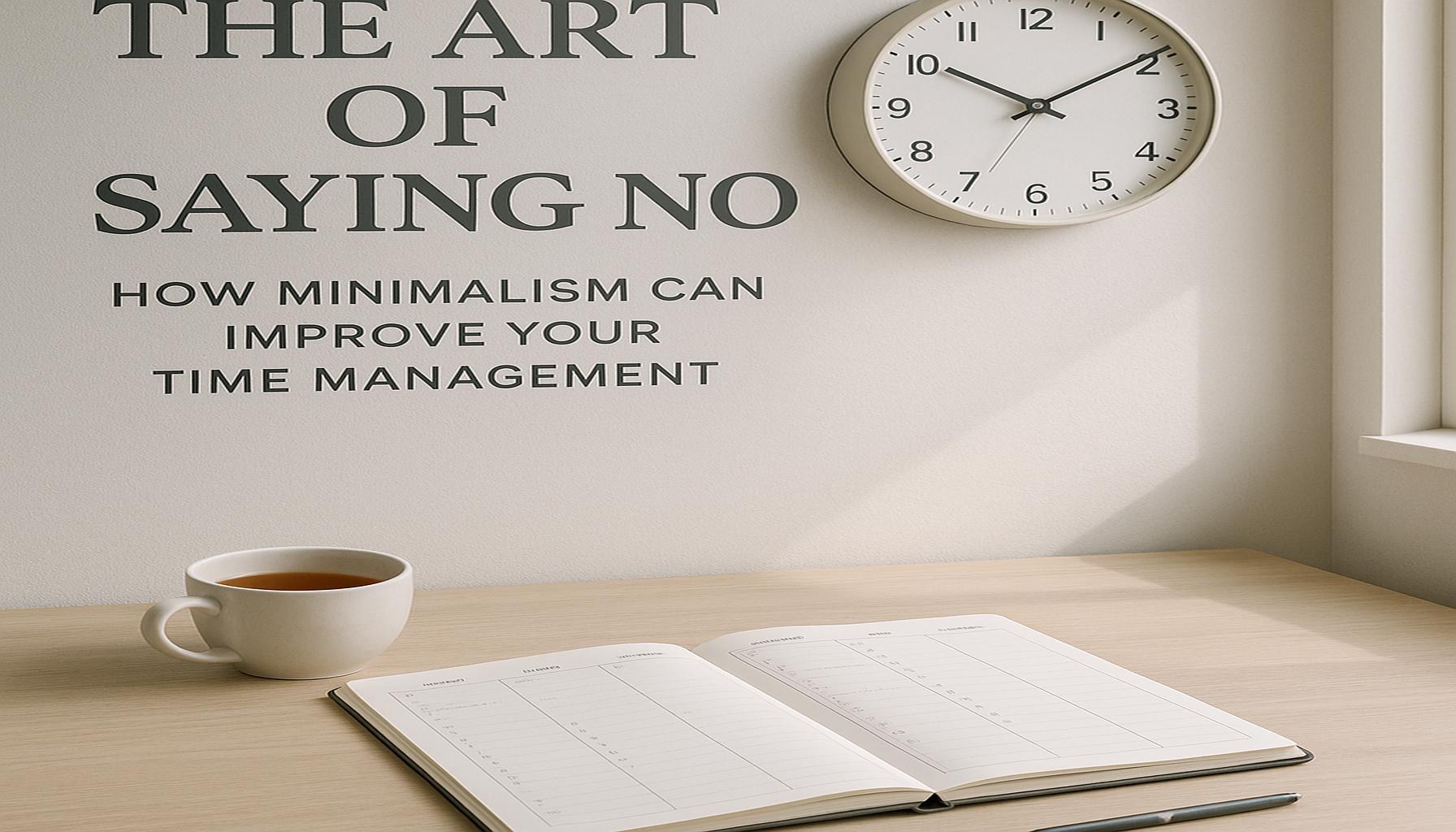
In a world filled with relentless commitments and distracting demands, mastering the art of time management has never been more crucial. The principles of minimalism provide powerful tools to help individuals reclaim their focus and energy. By embracing a minimalist mindset, we can learn to prioritize what truly matters, which often involves saying no to the excess that drains our time and resources.
Understanding how to effectively say no can lead to a more organized life, allowing for increased productivity and personal satisfaction. The relevance of minimalism extends beyond physical spaces; it influences our schedules, relationships, and overall well-being. This article will delve into the transformative power of minimalism in managing your time, culminating in a curated list of the Top 5 Techniques for mastering this essential skill.
- Recognizing priorities and setting boundaries
- Eliminating distractions from your life
- Fostering meaningful commitments
- Learning the difference between request and obligation
- Creating a sustainable and balanced schedule
Join us as we explore how minimalism can redefine your approach to time management, enabling you to lead a more intentional and fulfilling life.
Top 5: The Art of Saying No – How Minimalism Can Improve Your Time Management
In today’s fast-paced world, packed with endless commitments, tasks, and distractions, cultivating the ability to say “no” has become a crucial skill. The adoption of minimalism can significantly enhance your time management, providing the clarity and resolve needed to prioritize what truly matters. Here, we explore the top five ways minimalism can empower you to master the art of saying no, thereby revolutionizing your approach to time management.
5. Clarity in Priorities
An essential pillar of minimalism is achieving clarity in priorities. When overwhelmed by physical and mental clutter, it can be difficult to discern what truly matters. Minimalism prompts us to distill our core values and commitments, guiding us towards wiser decisions about where to allocate our time.

Begin by creating a list of personal core values. These are the principles and beliefs that steer your life. When faced with new commitments, refer to this list to assess whether they align with your goals. This deliberate approach helps streamline decision-making and reduces the chances of overcommitting. Once priorities are clear, saying no becomes less of a struggle and more of a habitual practice. For instance, if one of your values is family, commitments that take away from spending time with loved ones can be easily assessed and declined if they don’t support this priority.
4. Reduced Overwhelm
In today’s society, we are constantly bombarded with requests, obligations, and social pressures, leading many to feel frequently overwhelmed. Minimalism addresses this by promoting the reduction of overwhelming situations through the elimination of non-essential tasks and commitments. Having a clearer schedule makes it easier to decline requests that do not align with your priorities.
Implement a simple system for evaluating new opportunities. Ask yourself: Does this align with my values? Will it contribute positively to my life? If the answer is no, it becomes easier to decline the invitation or request, alleviating stress and anxiety. For example, consider a scenario where you’re invited to a networking event. If your goal is to enhance personal skill development rather than expanding your business circle, declining such an invitation can free up time for skill-building activities.
3. The Importance of Self-Care
Effective time management requires carving out time for self-care, an area minimalism heavily emphasizes. Prioritizing time for yourself creates a buffer against burnout and fatigue, both of which can hinder your ability to say no to additional obligations.
Recharging through self-care allows you to approach opportunities with a fresh and clear perspective. Prioritizing self-care makes you more attuned to what you can realistically handle without compromising well-being. Saying no to commitments that detract from personal time reinforces the importance of self-care in your daily routine. For example, if you are offered additional responsibilities at work that limit your downtime, seeing it as a threat to your health can make it easier to set boundaries.
2. Enhanced Focus
Minimalism champions an enhanced focus on tasks and goals that are genuinely important. Simplifying your life involves decluttering not just the physical environment but also the mental space. Fewer distractions enable you to channel energy toward meaningful tasks. With improved focus, the ability to say no increases, as you begin to truly understand the value of your time and energy.
One technique to strengthen focus is “time-blocking,” where specific blocks of time are dedicated to essential tasks. When new requests arise, evaluate how they fit into your schedule. If they disrupt this balance, confidently say no. This strategy becomes particularly powerful when paired with digital detoxes, enhancing both focus and productivity by eliminating digital clutter.
1. Nourishing Meaningful Connections
At its peak, minimalism’s impact on time management lies in nourishing meaningful connections. Mastering the art of saying no frees up time for relationships that add genuine value to your life. Minimalism encourages you to devote quality time to meaningful interactions instead of being stretched thin by numerous, less significant obligations.
As you begin distancing yourself from superficial connections or unnecessary commitments, you make room for deeper and more enriching relationships. This shift fosters a sense of community and fulfillment that significantly enhances happiness and well-being. In terms of time management, effectively saying no prioritizes personal interactions that nurture you, transforming life from mundane to meaningful.
Embracing the art of saying no through minimalism can dramatically enhance your time management abilities. From clarifying priorities to heightened focus and fostering meaningful relationships, each aspect contributes to leading a more intentional and fulfilling life. By taking the leap and practicing saying no, you may find your time management skills, and overall happiness flourish in ways you never thought possible.
As we delve deeper into the art of saying no and how minimalism can enhance time management, it becomes crucial to explore some of the underlying principles of minimalism and how they play into our daily routines. Minimalism is not merely a design aesthetic but a way of life that emphasizes the importance of making conscious choices about what we allow into our lives. This philosophy urges individuals to prioritize what truly matters, filtering out unnecessary distractions and commitments.One of the core aspects of minimalism is the emphasis on intentionality. By being intentional about our choices, we can make more relevant commitments that align with our personal and professional goals. This intentionality extends to our calendars, helping us carve out time for the activities and relationships that enrich our lives. Evaluating our commitments through this lens can lead to significant time savings.
When we choose quality over quantity, we tend to engage more deeply in the tasks at hand.Another critical thought in this discourse is the idea of mental clarity. A minimalist mindset promotes mental clarity, allowing for improved focus and productivity. When we say no to non-essential tasks or engagements, we free up cognitive resources that can then be employed on meaningful projects. This approach not only boosts our efficiency but also enhances creativity, as we are less likely to feel overwhelmed by competing priorities. Individuals who embrace this clarity often report a more profound sense of satisfaction with their work and personal lives.Furthermore, minimalism encourages the practice of reflection. Taking the time to reflect on what is truly essential can enrich our decision-making process. Regularly assessing your commitments can lead to a better understanding of where your time is being allocated. For instance, journaling about your daily activities can illuminate patterns and highlight areas that require boundaries.
Identifying what drains your energy can empower you to say no more confidently, ultimately allowing you to cultivate a lifestyle that aligns better with your deeper values.Lastly, the principle of sustainability is often overlooked in the discussion of time management. A minimalist approach considers the sustainable management of one’s life, ensuring that you do not overextend yourself to the detriment of your well-being. This foresight is crucial, especially in a world where the pressure to constantly take on more can lead to burnout. By understanding and embracing the balance between commitments and rest, individuals can maintain a sustainable pace that enhances productivity without compromising personal health and happiness.In conclusion, the intersection of minimalism and time management invites us to reconsider how we allocate our most precious resource: time. By saying no to the non-essential, we create space for the things that truly matter, leading to a richer, more focused life. As you navigate your own commitments and aspirations, remember that each “no” can be a gateway to greater freedom and fulfillment. Embracing minimalism offers a renewed perspective on how we can better manage our time and, in turn, enrich our experiences.
Frequently Asked Questions About Minimalism and Time Management
What is the connection between minimalism and time management?
Minimalism and time management are interconnected through the concept of prioritization. By adopting a minimalist lifestyle, individuals focus on what truly matters, thus eliminating unnecessary tasks and distractions. This enables one to manage time more effectively. Minimalism encourages people to say no to non-essential commitments, freeing up time to concentrate on significant tasks. According to experts, embracing minimalism can drastically reduce stress levels and enhance productivity by fostering a clearer understanding of personal priorities.
How can saying no be beneficial in a work environment?
Saying no in a work environment can be surprisingly beneficial. By declining additional responsibilities that do not align with one’s primary objectives, individuals can prevent burnout and focus on delivering quality work. It can also lead to more meaningful contributions, as employees dedicate their time and resources to projects where they can have the greatest impact. Specialists suggest that learning to say no can improve job satisfaction and overall work-life balance, which is essential for maintaining long-term career success.
Are there any techniques to effectively say no without causing offense?
Yes, there are several techniques to say no diplomatically, ensuring that relationships remain unaffected. First, it is essential to communicate clearly and honestly. Explain your reasons succinctly and offer alternative solutions if possible. Secondly, it is helpful to maintain a courteous tone that shows respect for the other party’s needs. Lastly, practice makes perfect. The more confidence you develop in asserting your boundaries, the easier it becomes. Many find that incorporating phrases like “I wish I could, but…” or “Thank you for the opportunity, however…” aids in delivering a tactful refusal.
What are some common challenges people face when trying to say no?
One common challenge is the fear of disappointing others or being perceived as uncooperative. Many individuals struggle with guilt or anxiety when declining requests, particularly in personal relationships or professional settings where they wish to be seen as team players. Additionally, the habit of overcommitting can be difficult to break. However, with practice and the adoption of minimalist principles, saying no becomes a tool for preserving one’s energy and maximizing efficiency. By overcoming these challenges, individuals often find greater personal fulfillment and success.
Conclusion: The Power of Saying No in Minimalism
Embracing the art of saying “no” is an integral part of minimalism, transforming how we manage our time and personal organization. This approach encourages us to declutter our schedules and focus on activities that truly matter. By prioritizing these meaningful tasks, we create space not only in our day but also in our minds.
The top strategies for integrating minimalism into time management include:
- Identifying Priorities: Clarifying what genuinely matters to you helps eliminate unnecessary commitments.
- Setting Boundaries: Learn to protect your time by gracefully declining tasks and obligations that do not align with your core goals.
- Practicing Mindfulness: Stay present and intentional with your choices, enabling more thoughtful decision-making.
- Streamlining Routines: Simplify daily tasks to save time and energy, focusing on activities that enhance your productivity and well-being.
- Continuous Reflection: Regularly assess your commitments to ensure they reflect your evolving priorities.
By embracing these principles, minimalism offers a clearer path toward efficient time management. It challenges us to reconsider how we allocate our energy and shifts our perception of success from doing more to doing what truly aligns with our values. In today’s fast-paced world, the art of saying “no” is not just a survival skill but a catalyst for personal fulfillment and professional success.
Ultimately, adopting a minimalist approach to time management can foster greater satisfaction and balance. As we navigate the complexities of modern life, let minimalism guide us toward a more intentional existence, where every “yes” is meaningful, and every “no” is empowering.
Related posts:
The Power of Less: How Reducing Commitments Increases Your Efficiency
Priorities First: Using Minimalist Principles to Define Essential Tasks
Simplify Your Schedule Minimalist Strategies to Boost Productivity
Less is More: The Impact of Minimalism on Stress Reduction and Time Management Improvement
Digital Minimalism: How to Disconnect to Maximize Your Time
Decluttering Your Schedule: How to Eliminate Time Wasters and Focus on What Matters

Linda Carter is a writer and organization expert specializing in minimalism and personal organization. With extensive experience helping individuals create clutter-free, functional spaces and adopt mindful habits, Linda shares her knowledge on our platform. Her goal is to empower readers with practical advice and strategies to simplify their lives, stay organized, and achieve a sense of calm and balance in their daily routines.