How to Create an Efficient Filing System in a Minimalist Office
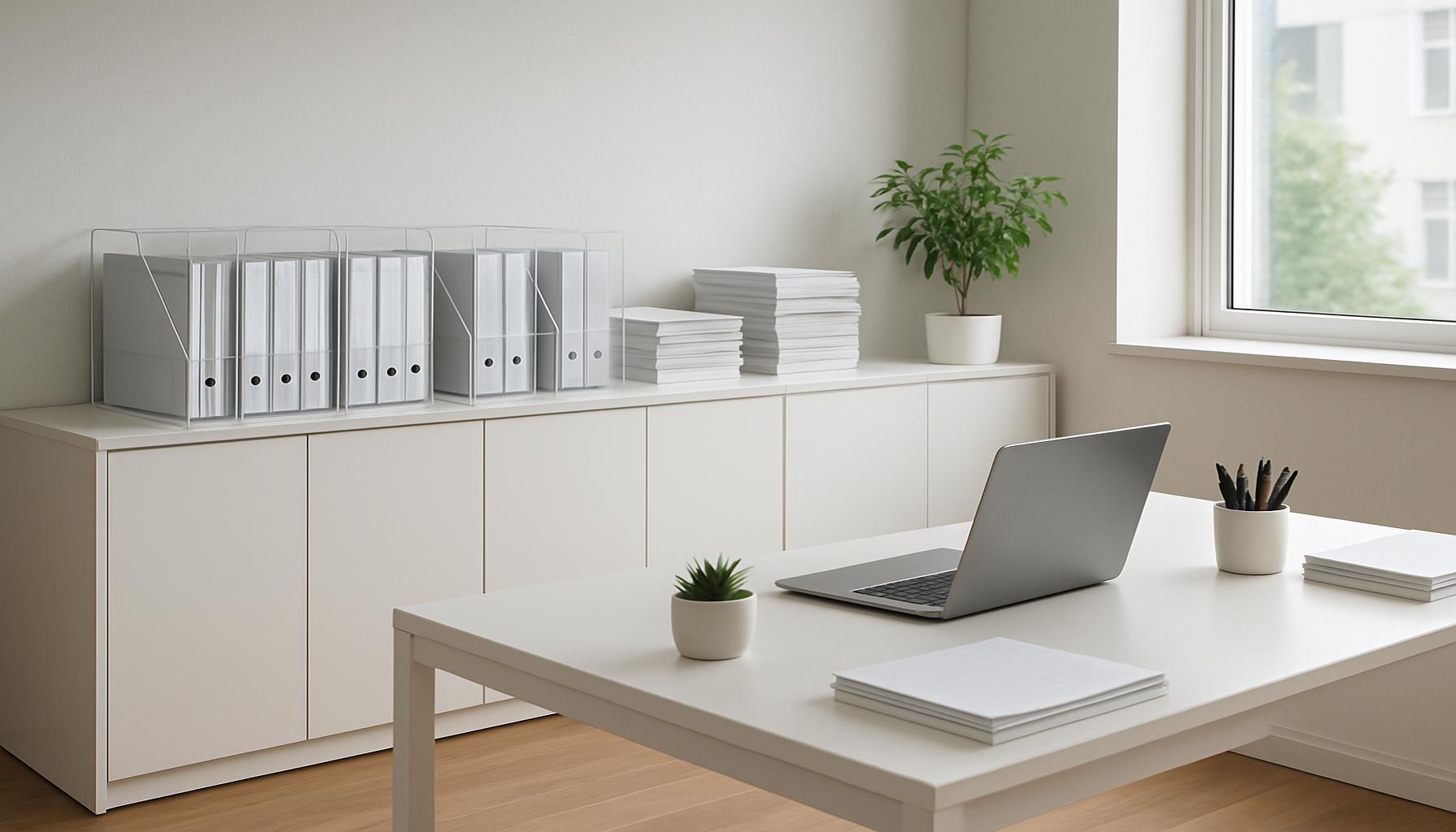
Creating Order in Chaos
An efficient filing system can transform your minimalist office into a haven of productivity. When designed well, it not only declutters your space but also enhances your workflow, saving you precious time and energy. Given the growing importance of organization in today’s fast-paced work environment, mastering this skill is essential.
Key Features of an Effective Filing System
- Simplicity: Focus on straightforward solutions that are easy to maintain. For example, rather than having overly complex sub-categories, using broad categories can simplify retrieval. A file labeled ‘Invoices’ is far easier to manage than a category split into ‘Invoices Q1,’ ‘Invoices Q2,’ and so forth.
- Accessibility: Ensure that files are easy to locate and retrieve when needed. This could mean having a dedicated filing cabinet within arm’s reach of your workstation or using digital tools that feature robust search capabilities, minimizing time spent hunting for information.
- Consistency: Use uniform labeling and categorization to streamline the process. This consistency creates a predictable environment that reduces cognitive load. For instance, employing the same font, size, and color scheme across all labels can contribute to a polished and professional look.
A well-structured system can have a profound impact on your professional life. By implementing a few strategic methods, you can minimize stress and maximize efficiency. Consider the following:
What to Include in Your System
- Digital Tools: Utilize software and apps for document management to reduce physical clutter. Tools like Google Drive, Dropbox, and Evernote allow you to store, categorize, and share documents seamlessly. This not only saves space but also ensures that important files are easily accessible from anywhere.
- Color Coding: Assign colors to different categories for quick reference. For instance, utilize green for financial documents, blue for project-related files, and red for urgent items. This visual cue can speed up the process of locating pertinent materials.
- Regular Maintenance: Schedule periodic reviews to keep your system current. A quarterly audit of your system ensures that redundant files are purged, and the most relevant documents are highlighted, pushing you to stay organized rather than allowing chaos to build up.
As you delve into creating a filing system tailored to your minimalist office, you will discover numerous techniques that vary in complexity and scalability. The goal is simple: achieving an organized workspace that reflects simplicity and efficiency. A well-organized filing system not only aids personal productivity but can also significantly enhance collaboration within teams, leading to smoother workflows and better outcomes.
Moreover, consider incorporating best practices observed in successful companies. For example, tech giants like Google emphasize the importance of a streamlined documentation process as part of their productivity mantra. Emulating such strategies can empower you to cultivate an environment conducive to efficiency and innovation.
In a world where digital distractions abound, investing time and effort into a robust filing system is not just beneficial, it’s imperative. As you embark on this journey, remember that the end goal is not just about maintaining order but also about fostering creativity and focus within your professional sphere.

Designing Your Filing System
Creating an efficient filing system in a minimalist office begins with an assessment of your specific needs and the nature of your work. A filing system is meant to serve you and your workflow, so it is essential to design it with your daily tasks in mind. Take some time to reflect on the types of documents you frequently handle and how you access them.
One effective approach is to categorize documents into primary themes that align with your daily operations. Common categories can include:
- Client Files: Organize all client-related documents, correspondence, and contracts in one designated area to streamline access and minimize disruptions.
- Financial Records: Group together invoices, expenses, and financial statements to help ensure timely payments and budget management.
- Project Documents: Keep all materials related to ongoing projects in one folder, aiding collaboration and quick reference for team members.
- Reference Materials: Accumulate research articles, reports, and documents that provide useful information for your work, ensuring they are always within reach when needed.
To further enhance the organization of your office, consider digitizing your documents. Digital filing systems have rapidly gained traction for their ability to reduce physical clutter while allowing flexible access to files from various locations. Utilizing cloud storage services like Google Drive or Dropbox not only makes it easy to store and share important documents but also integrates seamlessly with various digital tools you’re likely already using. This can be especially advantageous in a collaborative work environment where team members may need access to shared resources.
Instead of becoming overwhelmed by the vast number of documents you accumulate, approach the process with a minimalist mindset. An effective filing system is about streamlining and prioritizing. One efficient way to manage digital and physical files is by establishing a strict naming convention. For instance, using consistent prefixes like date, project name, or client name can help sort and retrieve documents quickly. You might consider a format such as ‘2023-Report-ClientName’ for instant clarity.
In addition, don’t underestimate the power of visual organization. Labeling systems go beyond mere words; incorporating color-coded labels can significantly enhance your ability to locate files quickly. For example, you might assign a specific color to urgent files, thereby enabling quicker decision-making. It’s a simple but highly effective visual cue that can reduce the time spent sifting through files and increase overall efficiency.
Finally, fostering regular habits of maintenance—such as a weekly review of your files—will prevent your system from succumbing to chaos. Set aside time to go through what’s active, what needs archiving, and what can be discarded. This will not only ensure you keep your system current but also reinforce the minimalist philosophy of keeping only what is necessary.
Investing time in developing a well-thought-out filing system will undoubtedly pay dividends. By keeping your workspace uncluttered and orderly, your focus and productivity will flourish, allowing you to stand out in a competitive professional landscape.
Creating an efficient filing system in a minimalist office involves strategic organization that prioritizes accessibility while reducing clutter. Here are key strategies to enhance your filing system and streamline your workspace.**1. Categorization:**Begin by categorizing your documents into clear, definable groups. You might consider categories such as “Invoices,” “Contracts,” “Client Files,” and “Project Documents.” By defining these categories, you can create a framework that makes it easier to file and retrieve documents when needed. This not only speeds up your workflow but also prevents the stress of searching through piles of paperwork.**2. Digital vs. Physical:**In a minimalist office, the balance between digital and physical documents is crucial. Consider digitizing as many documents as possible. Use cloud storage solutions to keep your files accessible yet out of sight. Leverage software for document management that offers features such as tagging and searches to streamline retrieval processes. For physical documents that must be kept, limit the number of folders and utilize a high-quality filing cabinet that complements your space. **3. Use Labels:**Clear labeling is essential for an effective filing system. Invest in quality labels that can be easily read and understood. Whether it’s a simple sticker label or a more sophisticated electronic label maker, ensure each categorization is evident at a glance. This not only supports quick access but also helps maintain the organization over time as others contribute to the filing system.**4. Regular Review:**Make it a habit to review and declutter your filing system regularly. Set aside time monthly or quarterly to assess what documents are still necessary and which can be shredded or archived. This practice prevents the buildup of unnecessary files and helps maintain the minimalist ethos of your workspace.**5. Strategic Storage Options:**Incorporate minimalist design principles in selecting storage solutions. Use clear boxes or simple drawer organizers that don’t clutter the aesthetics of your office. Ensure that your filing solutions are not only functional but also harmonize with the overall minimalist design—clean lines, simple colors, and uncluttered surfaces are key.Implementing these strategies can significantly contribute to creating an efficient filing system, allowing you to focus on productivity rather than dealing with an overwhelming amount of paperwork. By combining organization, technology, and minimalist principles, you can cultivate a workspace that enhances your efficiency and clarity of thought.
Implementing Tools and Techniques for Efficiency
To maximize the effectiveness of your filing system in a minimalist office, leveraging technology and tools can make a significant difference. Numerous software applications and platforms are designed to enhance file management, creating a more seamless workflow.
Document management systems (DMS) are a popular option among professionals seeking to improve their filing and retrieval processes. These systems often feature robust search capabilities, automatic backup options, and user-friendly interfaces that enhance accessibility. Platforms like Evernote, Notion, or Microsoft OneNote can serve as digital filing cabinets, allowing you to categorize notes, links, and files in an organized manner. Additionally, they often provide integration with other applications, leading to a more cohesive digital ecosystem.
When using software for filing, it’s essential to incorporate security measures to protect sensitive documents. Look for systems that offer encryption and user permission settings to ensure that only authorized personnel can access specific files. This is especially crucial for client documents or financial records, which often contain sensitive information that should not be disclosed. Engaging in discussions about data security and compliance safeguards with your software provider can help establish a trusted environment.
Another innovative approach to create an efficient filing system is through workflow automation. Tools like Zapier or IFTTT (If This Then That) can automate repetitive tasks, such as filing emails into specific folders or notifying team members when new documents are uploaded. By setting up these automations, you not only save time but also eliminate the risk of human error in your filing process.
Additionally, integrating project management software like Trello, Asana, or Monday.com can enhance your project document organization. These platforms allow you to attach files directly to tasks and projects, ensuring that all relevant information is easily accessible to team members. Adopting these systems also promotes collaboration, as team members can update statuses and comment on files, increasing productivity and ensuring project milestones are met without any oversight.
It’s also worth considering the physical aspects of your minimalist office environment when implementing your filing system. Utilize drawer dividers and desktop organizers to maintain an uncluttered workspace. Clear containers for office supplies and documents can create an aesthetic appeal while keeping essential materials at your fingertips. Just as a minimalist aesthetic involves thoughtful design, an effective filing system should maximize functionality without excess.
Don’t overlook the importance of training and communication within your team regarding the new filing system. Establishing a shared understanding of how to organize, access necessary files, and maintain the filing system is vital. Regular training sessions can teach team members about the software and tools employed, while also allowing them to provide feedback on any areas for improvement. By fostering a culture of communication and adaptability, your filing system can evolve alongside your team’s needs.
By harnessing the right tools, technology, and maintaining a collaborative environment, creating an efficient filing system in your minimalist office becomes a more achievable goal. With diligence and mindfulness, you can create an organized, productive workspace that supports your professional objectives. Each small step contributes to a more profound impact on your efficiency and overall work satisfaction.
Conclusion
In conclusion, establishing an efficient filing system in a minimalist office requires a thoughtful approach that harmonizes technology, organization, and teamwork. By utilizing document management systems and other innovative software tools, you can streamline your file storage and retrieval processes, paving the way for a more productive work environment. Emphasizing security measures in your digital practices ensures that sensitive information remains safeguarded while enhancing accessibility for your team.
Moreover, incorporating workflow automation not only reduces the burden of repetitive tasks but also mitigates the risk of human errors that can derail your filing efforts. The integration of project management software further elevates the organization of project-related documents, fostering a collaborative atmosphere where all team members can contribute and remain informed.
On the physical side, maintaining a clutter-free workspace through strategic organizational tools complements the minimalist design philosophy and promotes a sense of calm and focus that is essential for creativity and productivity. Remember that the effectiveness of your filing system doesn’t solely depend on the tools you choose but also on the training and communication among your team members in adapting to the new system. Regular evaluations and updates based on feedback will ensure that your approach continues to evolve in line with your operational needs.
Ultimately, a well-designed filing system in a minimalist office is an investment in efficiency, effectiveness, and well-being. By taking the time to implement these strategies, you could find your workspace transformed into an area that not only supports your professional goals but also cultivates a sense of clarity and peace that encourages optimal performance.
Related posts:
How Workplace Organization Can Increase Productivity in Minimalist Environments
The Art of Organizing: Minimalist Tools and Techniques for a Calmer Office
The Importance of Choosing Minimalist Furniture in Organizing the Workspace
How Lighting and Color Influence the Organization of the Workspace
How Minimalism Can Transform Your Workspace into a Productive Environment
Boost Productivity Minimalist Workspace Organization Tips

Linda Carter is a writer and organization expert specializing in minimalism and personal organization. With extensive experience helping individuals create clutter-free, functional spaces and adopt mindful habits, Linda shares her knowledge on our platform. Her goal is to empower readers with practical advice and strategies to simplify their lives, stay organized, and achieve a sense of calm and balance in their daily routines.